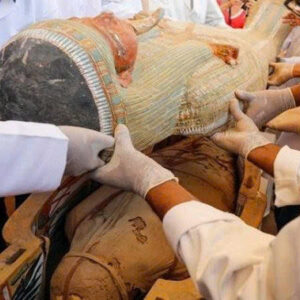
Deep within the unforgiving sands of China’s Tarim Basin, archaeologists uncovered a cemetery unlike anything ever found before.
The graves were nearly 4,000 years old.

Yet the people buried there looked nothing like what researchers expected.
Some had light-colored hair.
Others possessed striking facial features rarely associated with ancient East Asia.
Their bodies were wrapped in finely woven wool garments so well preserved that they appeared almost untouched by time.
For decades, scientists believed they must have been migrants from distant western lands.
Perhaps travelers from the vast Eurasian steppes.
Perhaps descendants of people who had crossed thousands of miles of mountains, deserts, and grasslands.
The mystery only deepened when researchers examined what these ancient people left behind.
They practiced dairy farming.

They crafted sophisticated textiles.
They buried their dead beneath towering wooden markers that rose from the desert floor like silent sentinels guarding forgotten secrets.
Who were they?
And how did they end up in one of the most isolated places on Earth?
The answer turned out to be even stranger than anyone imagined.
Modern DNA analysis revealed that the Xiaohe people were not recent arrivals from Europe.
Instead, they belonged to an ancient population whose roots stretched deep into prehistoric Inner Asia.
For thousands of years, they had remained remarkably isolated.

Yet somehow they adopted ideas, technologies, and cultural traditions from distant civilizations across Eurasia.
Long before the Silk Road existed.
Long before empires connected East and West.
Long before history books recorded the movement of peoples and goods.
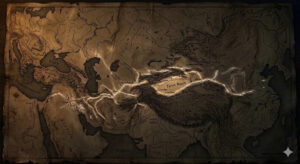
The Tarim Basin was already part of a hidden network of human interaction spanning continents.
The Xiaohe Mummies are forcing archaeologists to rethink one of humanity’s oldest assumptions:
Perhaps the ancient world was far more connected than we ever believed.
And beneath the silent sands of the desert, the evidence was waiting for nearly four millennia to be found.