Long before the pyramids rose from the sands of Egypt…
Before Stonehenge.
Before the first cities, kingdoms, or written words.
A group of humans living in the remote wilderness of northern Australia may have created one of the most advanced tools the world had ever seen.
And for tens of thousands of years, nobody knew it existed.
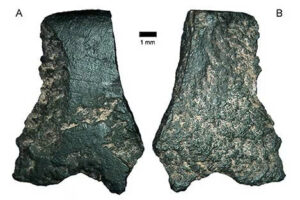
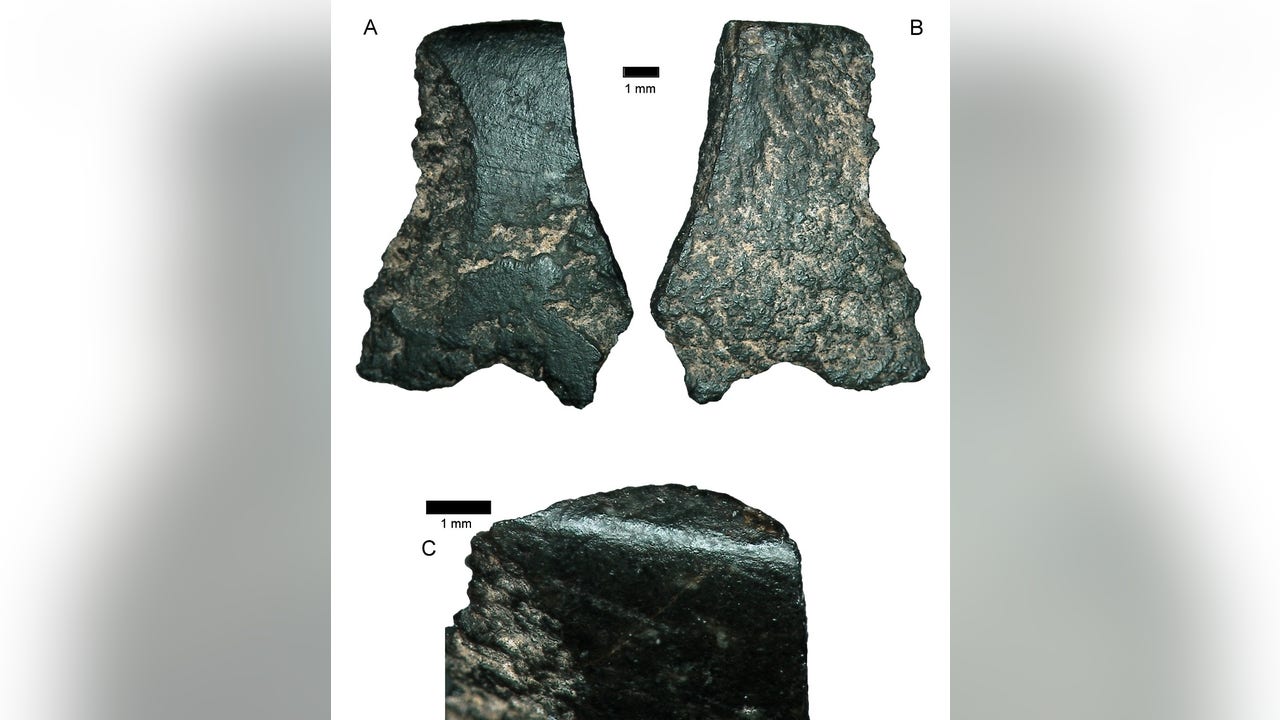
Hidden deep within the ancient rock shelters of Arnhem Land, archaeologists uncovered a small fragment of stone that appeared unremarkable at first glance.
But this was no ordinary stone.
Laboratory analysis revealed something astonishing.
The fragment belonged to a ground-edge axe dating back approximately 35,000 years.
The discovery sent shockwaves through the archaeological world.
Because it wasn’t supposed to exist.

For decades, researchers believed that ground-edge axes appeared much later in human history, emerging alongside farming societies and permanent settlements.
Yet here was proof that Ice Age hunter-gatherers had mastered a sophisticated technology thousands of years earlier than expected.
Unlike simple stone tools created by striking rocks together, a ground-edge axe required an entirely different level of skill.
The maker had to carefully shape the stone, then spend countless hours grinding and polishing its edge against harder surfaces.
It demanded planning.
Patience.
Precision.
And a deep understanding of materials.
This was not a tool made by accident.
It was the product of innovation.
The implications were enormous.
At the time this axe was crafted, mammoths still roamed parts of the world.
Europe was locked in the grip of the Ice Age.
Many human communities were struggling merely to survive.
Yet on the ancient Australian continent, people were already developing technologies that would not appear elsewhere for thousands of years.
Even more surprising, later discoveries in Western Australia’s Kimberley region suggested similar tools may have existed as early as 44,000 to 49,000 years ago.
If confirmed, these artifacts could represent some of the earliest advanced stone technologies ever created by our species.
The findings challenge a long-standing assumption that technological progress followed a single path originating from a few centers of innovation.
Instead, they reveal a different story.
Human ingenuity emerged independently in different corners of the world.
Innovation was not confined to the great civilizations that would come later.
It was already thriving among small communities living at the edge of the known world.
Today, that tiny fragment of stone stands as more than an ancient artifact.
It is a message from the distant past.
A reminder that the first great inventors of humanity may have lived far from the places history usually remembers.
And that some of humanity’s oldest secrets are still buried beneath the Australian earth, waiting to be discovered.
🔎 What other lost technologies might still be hidden beneath the sands, caves, and mountains of our planet?